Find 3 insurance workflows your agency can automate this month.
The Agency AI Workflow Audit is a focused review of how your agency handles leads, follow-up, CRM work, documents, renewals, and reporting. You leave with practical next steps, not a generic AI lecture.
We work with independent insurance agencies anywhere in the US, remotely over Zoom.
Step 1 of 2
Book your free workflow audit
15 minutes · find 3 workflows worth automating. Stack, volume, and audience details can wait for the call.
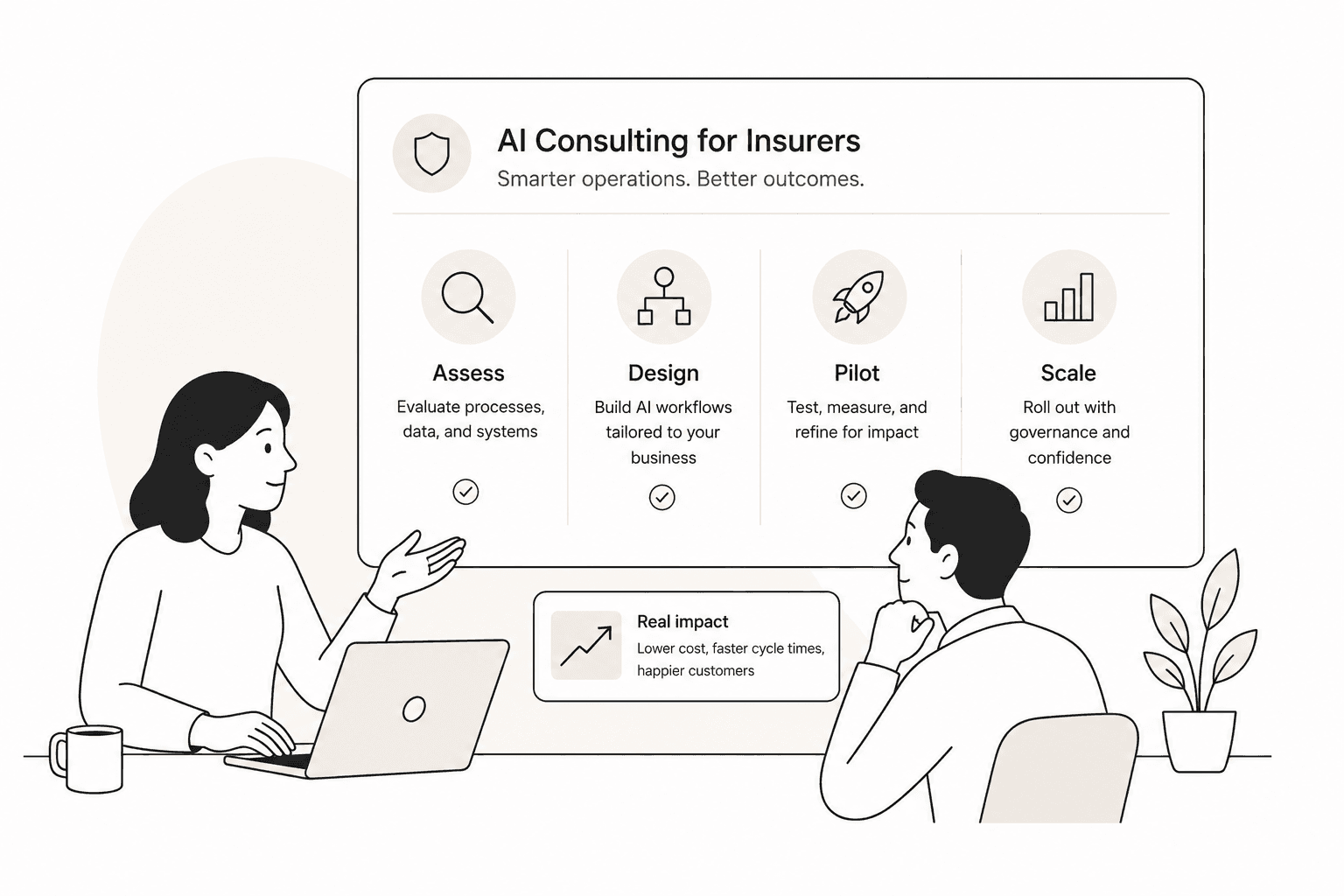
Explainer for Insurance AI Consulting's free workflow audit. Text reads "Find 3 insurance workflows your agency can automate this month," then two pain points: quote requests are coming in but follow-up is inconsistent, and renewals depend on spreadsheets, memory, or last-minute reminders. A sample lead intake to follow-up checklist shows four steps, with the first-response draft marked for review, followed by "Human approval before a client send" and "We do not replace licensed judgment, coverage advice, or producer approval." Cards show three services: Agency Dashboards, Renewal Outreach, and Document AI Workflows, with blank placeholder visuals. A four-step audit flow follows: map the current workflow, find manual bottlenecks, pick 3 automation ideas, choose the first build. Closing button: "Book your free workflow audit," 15 minutes, find 3 workflows worth automating. End card: insuranceaiconsulting.com/agency-ai-workflow-audit and hello@insuranceaiconsulting.com.
A practical audit built around agency operations.
Map the current workflow
We review how leads, quote requests, documents, renewals, and producer tasks move today.
Find manual bottlenecks
We identify repetitive handoffs, slow follow-up, scattered notes, and avoidable retyping.
Pick 3 automation ideas
You leave with three practical opportunities ranked by impact, simplicity, and business value.
Choose the first build
We recommend one workflow to build first, with the tool path and team handoff plan.
Best for agencies that need clarity fast.
A short audit gives you enough direction to decide whether the first automation should focus on intake, follow-up, renewals, documents, or reporting.
Quote requests are coming in, but follow-up is inconsistent.
Client and prospect details are scattered across email, forms, notes, and CRM fields.
Producers or CSRs spend time retyping the same information.
Renewals depend on spreadsheets, memory, or last-minute reminders.
Owners want a clearer view of lead source, quote activity, and pipeline bottlenecks.
What you get from the audit.
The audit is intentionally simple. The goal is to identify a workflow that can create momentum quickly and later become a repeatable operating system.
Workflow review across intake, follow-up, CRM, documents, renewals, and reporting.
A simple automation map showing where work can move faster.
Tool recommendations based on the agency systems you already use.
A first-workflow recommendation that can become a Weekend Automation Setup.
Human review points so AI supports the team without replacing licensed judgment.
What we look at: daily service tasks, renewals, and agency data.
Most audits start with the work that eats the day. We map it with you, step by step, then pick what is worth automating first.
See service task automation and renewal tracking.
Service requests
Certificates, policy changes, ID cards, endorsements, and billing questions: how they arrive, who picks them up, and where they stall.
Renewals
How renewals are tracked today, when outreach starts, and which accounts slip through without a touch.
Calls and email
Where calls and emails land, how missed calls get returned, and what never makes it into your AMS.
Reporting
Which numbers you check each week, where they come from, and how long they take to pull together.
Employee benefits agencies: service work and renewals.
Benefits agencies have their own rhythm: renewal season, census and enrollment requests, carrier follow-up, and employer questions all year. The audit covers those workflows the same way: map the current steps, find the manual bottlenecks, and pick the first build. AI drafts and organizes. Your team reviews and sends.
Renewal prep checklists and timelines per employer group
Census and enrollment request intake and routing
Carrier follow-up tasks and reminders
Employer service request tracking
Start with the free audit, then build the first workflow.
Share your workflow first, then choose the Zoom audit time. If you stop after step one, your request is already saved for follow-up.
Common questions
Questions agencies ask before they start.
What happens in the free workflow audit?
You share how leads, follow-up, documents, renewals, or reporting move today. We map the bottlenecks and leave you with three practical automation ideas plus a recommended first build. It is a working session, not a generic AI lecture.
How long does it take?
Plan on about 15 minutes for the live review after you submit the short form and pick a Zoom time. If you stop after step one, the request is still saved so we can follow up.
Do we need to buy software during the audit?
No. The audit is meant to decide whether a workflow is worth improving and what should come first. Tool recommendations come after the operating path is clear.
What is the difference between the free audit and the Agency AI Audit?
The free audit is a focused first conversation. The Agency AI Audit is a deeper paid workflow map, stack review, ROI estimate, and build-priority roadmap. Public pricing for that deeper audit starts at $250+.
Do you work with agencies outside New York?
Yes. We work with independent insurance agencies anywhere in the US, remotely over Zoom.
Can AI help an employee benefits agency with service tasks and renewals?
Yes. We map benefits workflows like renewal prep, census and enrollment requests, carrier follow-up, and employer service requests, then pick the first one worth automating.
Can you help with daily service tasks, not just new leads?
Yes. Service requests, policy changes, certificates, and billing questions are often the best first workflows to map in the audit.